Switch from EVW to UK ETA for Two Years of Travel
The Electronic Visa Waiver (EVW) is being decommissioned. In its place sits the Electronic Travel Authorisation (ETA) — a £10, two-year, multi-entry digital permission that every non-visa national…
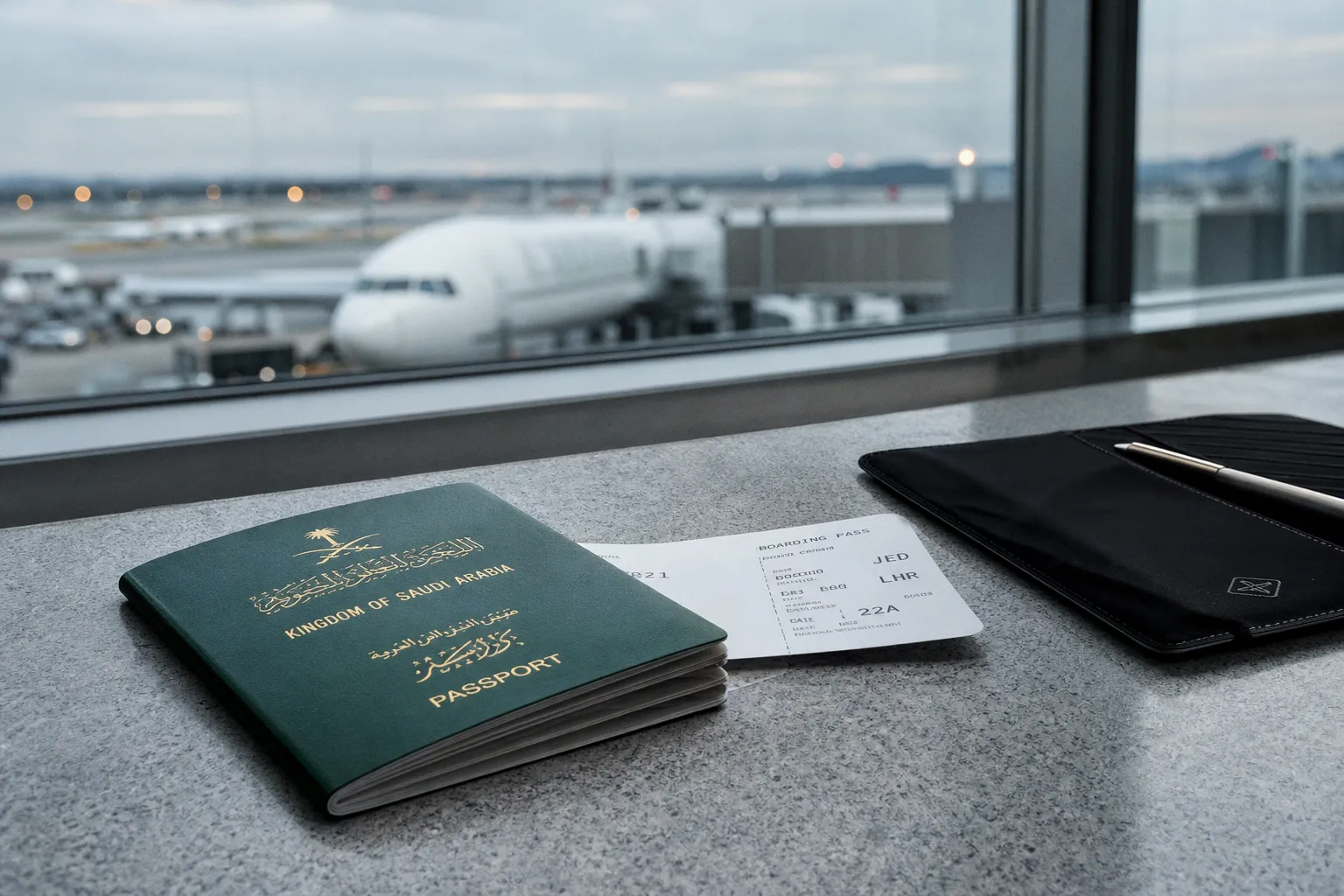
The Electronic Visa Waiver (EVW) is being decommissioned. In its place sits the Electronic Travel Authorisation (ETA) — a £10, two-year, multi-entry digital permission that every non-visa national will require before boarding UK-bound transport by the end of 2025. This is not a rebrand. It is a structural change to the UK's pre-entry clearance model, and the mechanics, the cost, and the eligibility perimeter have all moved.
For travelers who previously relied on the EVW — primarily nationals of Gulf Cooperation Council states — the shift carries three operational consequences: a different fee structure, a different validity profile, and a passport-linked application that runs through the Home Office's central digital system rather than airline-specific document checks. Below is the compliance picture for anyone converting off the legacy waiver and onto the ETA.
The EVW is closing in phases. The ETA replaces it — same eligibility class, different mechanism, different price, different validity.
The Shift from Paper-Based Waivers to Digital Authorisation
The EVW functioned as a short-life permission tied to a single trip. The application was online; the output was a document that travelers presented at boarding and again at the UK border. One application covered one journey. A second visit required a second application, a second fee, and a second round of pre-departure administration. The model was administratively heavy for repeat travelers and operationally inconsistent for carriers trying to verify permission status at the gate.
The ETA runs on different mechanics. It is passport-linked, not document-linked. It is multi-entry, not single-entry. It is digital — there is no PDF to print, no emailed letter, no boarding-pass attachment. The authorisation status is read directly from the passport record by Border Force officers and by carrier check-in systems. The application is submitted once. The output persists across trips until the underlying passport expires or the two-year ceiling is hit.
The transition has been executed in measurable phases:
- November 2023: Initial ETA launch, restricted to Qatari nationals as the pilot cohort.
- February 2024: Expansion across the Gulf Cooperation Council — Bahrain, Kuwait, Oman, Qatar, Saudi Arabia, and the United Arab Emirates. EVW issuance to GCC nationals ceased at this point.
- End of 2025: Full global implementation. All non-visa nationals — covering the bulk of the world's visa-waiver population — must hold a valid ETA before travel.
The Home Office has not published a hard date for the final EVW decommissioning beyond the regional rollouts. The current operational signal is that legacy EVW categories are being absorbed into the ETA as each phase activates. Travelers holding a valid EVW at the point of phase transition should treat that document as expiring on its printed end date; it will not convert into an ETA automatically.
ETA is not a visa. It is a digital travel permission that sits in a different legal category from entry clearance and operates under separate statutory authority.
Two Years of Multi-Entry Access for a Ten Pound Fee
The fee schedule is short and unambiguous: £10 per applicant, charged at the point of submission. There is no per-trip surcharge. There is no premium tier. There is no expedited processing fee. The figure is fixed across the application portal and the mobile channel.
What that £10 buys is a different product from the EVW:
- Validity: Two years from the date of approval, or until the holder's passport expires, whichever comes first.
- Entries: Multiple. There is no per-trip application requirement during the validity window.
- Stay ceiling: Up to six months per visit, under standard visitor rules. The ETA does not extend the visitor ceiling; it preserves multi-entry access within it.
- Format: Digital, linked to the passport number used in the application. A new passport requires a new ETA.
The economic logic of the switch is straightforward. A traveler making two trips per year over the ETA's two-year validity pays £10 in total, against what would previously have been repeated single-trip applications. For frequent visitors — family contact, business short stays, transit hubs, second-home travel — the cost-per-trip falls sharply. For occasional travelers, the fee is a modest premium over the legacy model exchanged for permission the EVW never offered: it does not have to be renewed before every flight.
The fee is collected in advance and is non-refundable once an application is submitted, regardless of the decision outcome. Applicants refused on eligibility or security grounds do not receive a return of the £10. This is consistent across the Home Office's digital border products and is consistent with the EVW's terms.
Lessons from the GCC Rollout and the 2025 Global Mandate
The GCC rollout is the operational reference point for the global schedule. It is where the ETA has actually run at scale, where approval and refusal rates have been observed, and where the EVW's retirement was first executed. The mechanics that worked — and the friction that emerged — are the closest available proxy for what other non-visa national cohorts should expect as their phase windows open.
Three signals from the GCC phase matter:
1. Approval throughput has been high. The Home Office has not published granular refusal data, but the published eligibility perimeter for GCC nationals was wide enough that denial has been the exception rather than the norm for applicants with clean immigration histories.
2. Biometric data capture has been lighter than initially signalled. Earlier coverage suggested the ETA could collect facial biometrics at the border. The current operational system relies on the passport photo and biographic data provided at application, with optional biometric enrolment deferred to a later phase.
3. Carrier integration has been the lag point. Airlines operating Gulf routes were required to update check-in systems to read the ETA status flag against the passport record. Some routes reported initial mismatches between approval status and gate-board verification during the first months of the rollout. These mismatches have stabilised, but they illustrate the dependency between the Home Office system and the air carriers' passenger processing infrastructure.
The 2025 global mandate assumes this same operational chain will hold up across every non-visa national cohort. That is an ambitious assumption given the diversity of issuing authorities, biometric passport standards, and carrier relationships involved.
The ETA scheme is a digital border system, not a visa system. It runs on the same infrastructure that the UK's post-Brexit immigration reforms have been building toward since 2020.
The Home Office has stated the end-of-2025 target consistently. It has not committed to a contingency for slippage, nor has it published a country-by-country phase schedule for the remaining cohorts. Travelers from regions whose ETA phase is not yet open should monitor the Home Office's published list rather than relying on travel-agent briefings, which often lag the operative position by weeks.
Operational Differences Between the Legacy EVW and the New ETA
The EVW and the ETA do the same job — pre-travel permission check for non-visa nationals — but they do it through different administrative machinery. The differences are not cosmetic. They affect every step from application to border arrival.
| Parameter | Legacy EVW | ETA |
|---|---|---|
| Validity period | Single trip | 2 years or until passport expiry |
| Entry type | Single entry | Multiple entries |
| Fee structure | Charged per application | £10 per applicant, multi-trip |
| Format | Printed or digital document | Digital, passport-linked |
| Application channel | Online form, airline-adjacent | UK government portal or app |
| Stay duration | Up to 6 months | Up to 6 months per visit |
| Carrier verification | Document presented at gate | Status read from passport record |
| Decision turnaround | Hours to days | Typically 3 working days |
| Link to immigration history | Limited | Linked to prior UK travel and immigration records |
The carrier verification row is the most operationally consequential. Under the EVW, the airline saw a document. Under the ETA, the airline sees a status flag tied to passport number and biographic data. Any change to passport, name, or biographic record invalidates the existing ETA and requires a new application. Travelers who renew their passport mid-validity — common in Gulf states, where frequent renewal cycles are standard — should expect to reapply at no additional charge recovery from the £10 already paid.
The decision turnaround is also worth noting. The ETA is typically processed within three working days, but processing time is not guaranteed and can extend during peak travel windows or when additional security checks are required. The legacy EVW was often issued within hours; the ETA's longer processing window is a planning consideration for last-minute travel.
A valid ETA does not guarantee entry to the UK. Border Force officers retain the right to refuse admission on arrival regardless of authorisation status.
Maintaining Compliance Under the Standard Six Month Visitor Rule
The ETA authorises travel to the UK border. It does not authorise a specific stay, a specific activity, or a specific number of entries beyond what the underlying immigration rules permit. The standard visitor rules — six months maximum per visit, no employment, no recourse to public funds, no recourse to permanent settlement — continue to apply. The ETA operates on top of those rules, not in place of them.
Travelers converting from EVW use should be aware of three compliance points specific to the ETA's design:
- Passport changes require a new ETA. A new passport number, a new biographic record, or a material name change will void the existing authorisation. The Home Office does not transfer ETAs between documents. A fresh application — and a fresh £10 — is required.
- Refusal at the border is not appealable through the ETA process. A Border Force officer who denies entry on arrival does so under separate immigration authority. The ETA's pre-travel permission does not provide a route of challenge against an in-country refusal decision.
- Overstay and immigration-history breaches feed forward. The ETA system shares its underlying data with the Home Office's immigration records. A prior overstay, a prior refusal, or a prior breach of visitor conditions will be visible to the decision-maker on a subsequent ETA application and may affect the outcome.
For travelers using the two-year multi-entry facility for repeated short stays, compliance with the six-month-per-visit ceiling is straightforward but cumulative. Six months per visit does not mean a rolling six months across the two-year validity. Each visit is assessed independently. Travelling in and out before the six-month ceiling resets is the standard compliant pattern.
Travelers planning repeated short stays over the two-year window should also account for the wider administrative preparation the transition implies — passport renewal timing, app installation and account setup before travel, and contingency planning if an application is delayed. Broader lifestyle and travel-planning coverage for repeat UK visitors, including practical life tips and logistics beyond the immigration layer, can be found in independent travel and lifestyle coverage. The immigration layer is the entry gate, but the operational layer runs wider.
Immediate Compliance Actions
The author's standing checklist for anyone converting off the EVW and onto the ETA:
- Confirm eligibility phase status. Check the Home Office's published list for your nationality. If the EVW is still being issued to your cohort, weigh whether to apply now or transition directly to the ETA.
- Apply before booking, not after. The £10 is non-refundable. Wait for approval before committing to non-refundable travel.
- Match the application passport to the travel passport. Mismatches invalidate the authorisation.
- Note the validity end date. Two years from approval or passport expiry, whichever comes first. Diary both.
- Plan for the three-working-day processing window. Apply at least a week before departure to absorb delays.
- Carry the same passport used in the application. Switching passports mid-trip forces a reapplication.
- Comply with the six-month visitor ceiling per visit, not cumulatively.
- Retain the application reference. The Home Office system uses it to trace status; airline check-in systems may request it during the transition phase.
The EVW did its job. It was a transitional instrument for a pre-digital border. The ETA is the post-2025 instrument — wider in scope, longer in validity, and structurally simpler for the carrier and government infrastructure that have to verify it. For frequent visitors, the math favours the switch. For first-time users, the math is the same as it would have been under any pre-travel clearance regime: apply early, carry the matching passport, and respect the visitor ceiling at the border.