Decide between UK ETA and Visitor Visa for business
- £10 and a three-day wait.
- That is the cost of getting your entry permission wrong — or rather, the cost of getting it right, if you qualify for the UK's Electronic Travel Authorisation.
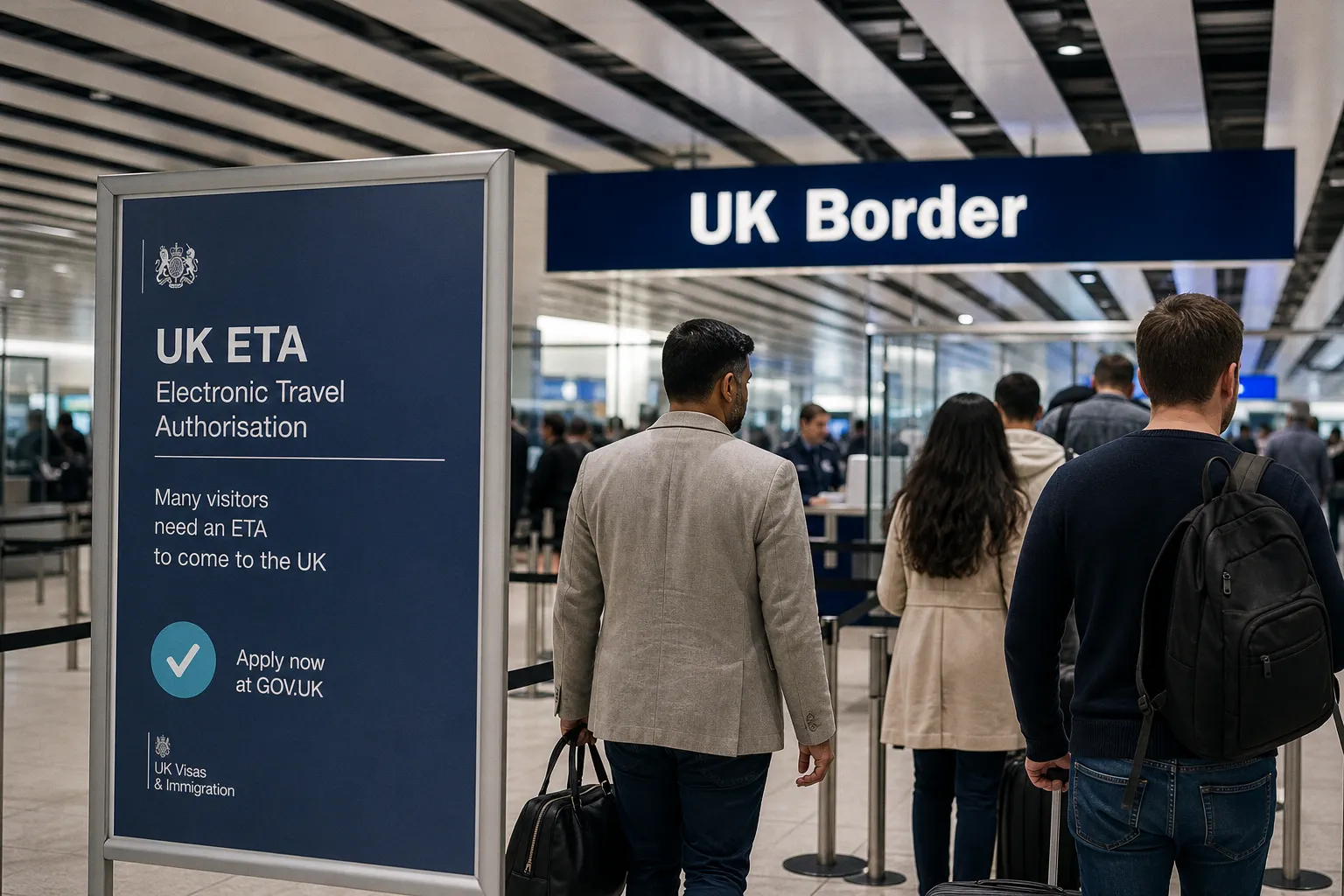
Here is the decision framework you actually need.
Defining the Digital Divide: ETA versus Standard Visitor Visa
The UK Electronic Travel Authorisation is not a visa. Repeat that until it sticks. It is a digital travel authorisation — a pre-clearance check tied to your passport, confirming that you pose no immigration or security risk before you board a plane. It grants permission to travel to the UK, not permission to enter. The border officer still makes the final call.
The Standard Visitor Visa is a different animal entirely. It is a formal entry clearance application, processed through a UK visa application centre, requiring biometric enrolment, documentation packages, and a decision from a Home Office caseworker. It exists for nationals of countries the UK does not trust to travel visa-free — full stop.
The split is not about the purpose of your trip. It is about where your passport was issued.
Your nationality — not your itinerary — determines which route you take. There is no choice between the two; one is a requirement, the other is not an option.
For business travellers, this distinction has concrete consequences. Under the ETA, you move fast: an online application, £10, and you are typically cleared within three working days. Under the Standard Visitor Visa route, you are looking at a process that can stretch to weeks, with appointment availability at VACs often being the bottleneck.
It is worth understanding that the ETA system was designed to digitise and streamline border security, not to create a new category of travel permission. Think of it as the UK catching up with systems already in place in Australia (ETA/ETA), the United States (ESTA), and Canada (eTA). The policy logic is identical: screen travellers before they fly, shift the risk assessment upstream, and reduce pressure on arrival halls. The difference is that the UK is applying this model to a much broader set of nationalities — essentially anyone who currently enjoys visa-free access.
Nationality and Eligibility: Who Qualifies for the ETA System
The ETA is available exclusively to non-visa nationals — citizens of countries whose passport holders do not need a visa to enter the UK for short visits. If you hold a passport from the United States, Canada, Australia, Japan, South Korea, or any EU/EEA member state, you fall into this category. You do not need a visa for tourism, family visits, or business activities covered under the Standard Visitor route. What you now need is an ETA.
If you are a visa national — someone who currently requires a visa for any visit to the UK — the ETA system is irrelevant to you. You apply for a Standard Visitor Visa. Period. There is no shortcut, no workaround, and no amount of business sponsorship that changes this unless you are switching to a work visa entirely.
The rollout timeline matters because it determines when the ETA becomes mandatory for your nationality:
| Phase | Date | Nationalities Covered |
|---|---|---|
| Phase 1 | November 2023 | Qatar |
| Phase 2 | February 2024 | Bahrain, Kuwait, Oman, Saudi Arabia, UAE |
| Phase 3 | 2025–2026 | Remaining visa-exempt nationalities (US, EU, Canada, Australia, Japan, etc.) |
If you are a Gulf state national, the ETA is already mandatory. If you hold a US or EU passport and are reading this in 2025, check the GOV.UK tool immediately — the requirement may already be live for you, or it may be weeks away. Do not assume.
The GOV.UK nationality checker is not optional reading. It is your first move before booking any flight to the UK.
For those managing international travel logistics across multiple nationalities within a single team — whether coordinating a conference delegation or a product launch visit — each passport holder's eligibility must be verified individually. One person's ETA eligibility does not extend to their colleague holding a different passport.
Dual nationals face an additional wrinkle. If you hold citizenship of both a visa-exempt country and a visa-required country, you can use your visa-exempt passport to apply for an ETA. But if you only have a visa-required passport, you are on the Standard Visitor Visa track regardless of where you live or work. Residency does not override nationality in UK immigration — your passport is the only thing that counts at the gate.
Permitted Business Activities: What You Can Do Under Each Route
This is where most applicants get tripped up. The assumption is that a "business trip" requires a business visa. Wrong. Under the Standard Visitor route — and therefore under the ETA for eligible nationals — a defined set of business activities is perfectly legal without a work visa.
Here is what the Home Office permits under the Standard Visitor route, which the ETA covers for non-visa nationals:
1. Attending meetings, conferences, and trade fairs — whether at your company's London office or at ExCeL. You can sit, listen, discuss, and network. The critical line is that you are an attendee, not an organiser running the event.
2. Negotiating and signing contracts — you can close a deal in person. You just cannot start working on delivering it from within the UK.
3. Site visits and inspections — visiting a supplier's factory, checking a construction project, auditing a partner's facility.
4. Internal company activities — if you work for an overseas company with a UK branch, you can attend internal meetings, receive briefings, and participate in corporate planning sessions. This covers the scenario where your multinational sends you to the London headquarters for a quarterly review.
5. Intra-corporate activities — advising, consulting, troubleshooting, or sharing skills with a UK entity, provided you remain employed and paid by the overseas company and the activity does not exceed six months.
Here is what you absolutely cannot do under an ETA or Standard Visitor Visa:
- Take paid or unpaid employment with a UK employer.
- Provide services directly to UK consumers or clients.
- Undertake a work placement or internship.
- Live in the UK for extended periods through successive short visits (the "serial visitor" risk).
The line between "attending a meeting" and "doing work" is the most common tripwire at the border. If a border officer asks what you are doing in the UK and your answer sounds like you are coming to do a job — even a short one — you need a work visa, not an ETA. A software developer flying in to attend a three-day tech summit is fine. The same developer flying in to spend a week writing code alongside the London engineering team is not. The activity itself, not the job title, determines legality.
For business travellers monitoring industry-specific developments and regulatory changes, the principle remains the same: your planned activity, not your professional interests, determines your immigration route.
Cost, Validity, and Processing: Comparing the Logistics
The numbers tell the story clearly.
| Parameter | UK ETA | Standard Visitor Visa |
|---|---|---|
| Application fee | £10 | £115 (6-month visa) |
| Processing time | Typically 3 working days | 3–6 weeks (standard); 5 working days (priority) |
| Validity | 2 years or until passport expires | 6 months, 2 years, 5 years, or 10 years |
| Entries | Multiple | Multiple (for 2-year+ visas) |
| Maximum stay per visit | 6 months | 6 months |
| Application method | Online, from anywhere | In-person at a Visa Application Centre |
| Biometrics required | No | Yes (fingerprints and photograph) |
The ETA's £10 fee is almost negligibly low. The real cost comparison is in time and disruption. A Standard Visitor Visa appointment requires visiting a VAC, submitting physical documents, and waiting — often three to four weeks for a straightforward application, longer if additional scrutiny is applied. Priority processing exists at a premium (typically around £500 for a five-working-day turnaround), but it is not available at every VAC and does not guarantee a result if the application raises questions.
For a business traveller who needs to be in London next week for a contract negotiation, the ETA is the only viable path — if they are eligible. If they are a visa national, they should have started the process a month ago. This is the strategic calculus: eligibility determines urgency, and urgency determines whether you make the meeting or miss it.
The two-year validity of the ETA is a significant advantage for frequent business visitors. You apply once, and for the next 24 months, you can enter and exit the UK multiple times without reapplying — as long as your passport remains valid. If your passport expires in six months, your ETA expires with it. Renew your passport, and you reapply. For organisations that send the same executives to the UK quarterly, this eliminates the recurring admin burden that comes with short-validity visas.
There is a practical cost that rarely appears in the comparison tables: the opportunity cost of the Standard Visitor Visa process itself. When your key commercial lead has to spend half a day at a VAC providing biometrics, then wait three weeks for a decision — during which they cannot confirm international travel plans — the £115 fee is the smallest part of the equation. Business moves faster than visa processing queues. For non-visa nationals, the ETA removes that friction almost entirely.
Navigating the Transition: When the ETA Becomes Mandatory
The phased rollout creates a window of confusion. Some nationalities are already under the ETA mandate; others are not yet. But the direction is unmistakable: every non-visa national will require an ETA to travel to the UK by the end of the rollout.
During the transition, three risks dominate:
1. Assuming your nationality is not yet covered. The rollout dates are approximate. GOV.UK is the only authoritative source. Check before every trip.
2. Booking flights before confirming ETA approval. The three-day processing time is typical, not guaranteed. Applications flagged for additional review take longer. If you book a flight departing in 48 hours, you are gambling.
3. Confusing the ETA with a visa and over-stating your activities. If a border officer suspects you are doing more than the Standard Visitor route permits, your ETA will not save you. You will be refused entry.
For organisations sending employees to the UK, build the ETA into your travel approval process. It should be as standard as checking passport validity — a pre-departure compliance step, not an afterthought at the airport. Finance teams should note that unlike the Standard Visitor Visa, there is no priority or expedited service for ETAs; you cannot pay more to go faster. The system processes applications in queue, and the queue is the queue.
A final operational note for travel managers: the ETA is linked to a specific passport. If an employee renews their passport mid-validity, their existing ETA is void. They need a new one. This is an easy detail to overlook in the gap between the HR team updating passport records and the travel team approving flights.
The refusal most business travellers could have avoided is the one that comes from choosing the wrong route. Visa nationals who try to enter on an ETA they were never eligible for. ETA holders who describe their trip in terms that sound like employment. Non-visa nationals who show up without an ETA because they assumed their passport was enough.
Your move is clear: verify your nationality's status on GOV.UK, apply for the correct authorisation well before your travel date, and describe your business activities using the exact language the Home Office recognises. Do not improvise. Do not assume. The £10 application takes minutes; the consequences of getting it wrong take months to resolve.