Electronic travel authorisation eta: 5 key rules
- You're standing at the boarding gate with a confirmed seat and a passport valid for another four years, and the airline agent asks to see your UK ETA.
- You're not a visa national.
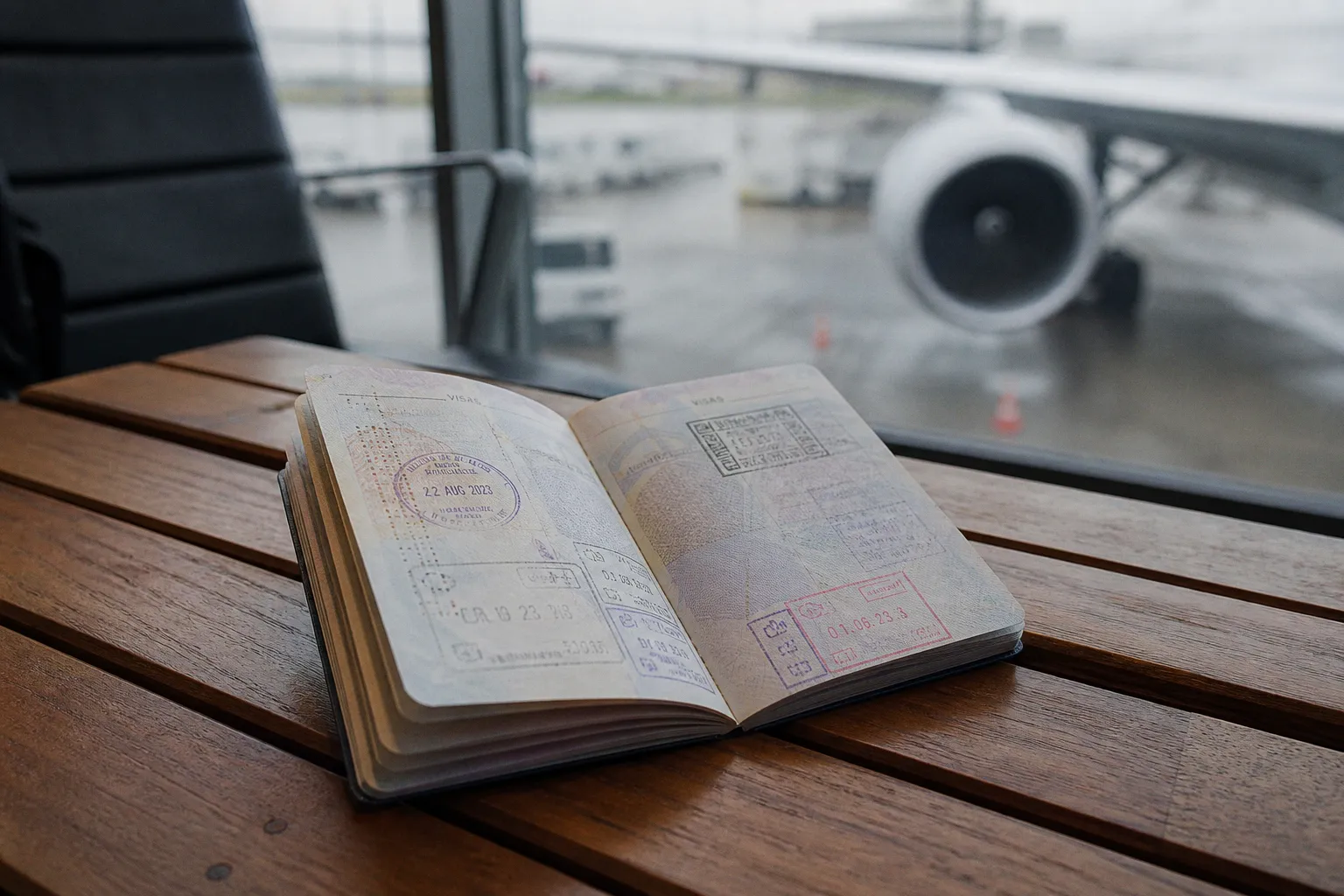
The Electronic Travel Authorisation isn't a visa in the old stamp-in-your-passport sense, but it is now a mandatory digital handshake between you and the Home Office. Here is how the scheme actually works, what it costs, where travellers most often trip up, and how to make the whole thing disappear from your to-do list for the next two years.
What the ETA actually is — and who it covers
The ETA is the UK's digital permission slip for short visits. If you hold a passport from a country that didn't previously require a visa for tourism, business, transit, or short study stays — think the United States, Canada, Australia, New Zealand, Japan, Singapore, South Korea, the EU member states, the Gulf countries, and dozens more — you now need an ETA before you travel. It links electronically to your passport, lives in the Home Office's system, and gets pinged when your details are scanned at the airline check-in desk or at the eGates on arrival.
The rollout has been staggered, which is part of the reason confusion still lingers. Here is the timeline as it stands today:
- November 15, 2023 — ETA scheme launches for Qatari nationals.
- February 22, 2024 — Expanded to nationals of Bahrain, Kuwait, Oman, Saudi Arabia, and the UAE.
- November 27, 2024 — Requirement extends to all eligible European nationals.
- April 2, 2025 — Requirement extends to all remaining eligible non-European non-visa nationals.
If you are reading this after the April 2025 cut-off and you hold a passport from any of the 90-plus visa-exempt countries, you are firmly inside the scheme. The grace periods are over.
Think of the ETA as your passport's silent sidekick: it doesn't replace the visa-free privilege, but it sits alongside it and gets checked before you ever reach the desk.
One red flag worth clearing up straight away: an ETA is not a visa, and crucially, it does not guarantee entry. The final say still belongs to the Border Force officer at passport control, who can refuse landing if something in your circumstances raises concerns — a previous overstay, a mismatched travel purpose, insufficient funds, that sort of thing. The ETA just clears you to board the plane and join the queue.
The £10 fee, and what the money actually pays for
The application costs £10 per traveller, and that figure does not change whether you are applying for an infant or a retiree. There is no family discount, no group rate, and no fee waiver. For a family of four heading to London for half-term, that is £40 before anyone has packed a sock.
What you are paying for is an automated digital check, not a visa interview. The system cross-references your passport data against security and immigration watchlists and confirms whether you are cleared to travel. There are no biometrics to submit in the standard application, no documents to upload in most cases, and no in-person appointment to attend. The £10 covers the cost of running that risk assessment and the IT infrastructure behind it.
If your application is refused, you do not get the £10 back, and that refusal is not the same as a visa denial in the immigration sense — it simply means the automated check flagged something that needs further scrutiny. In most cases, that "further scrutiny" means you can reapply through the standard visa route rather than being permanently barred. The official guidance is to wait at least a few days before trying again, and to be ready to provide supporting documents if the Home Office contacts you.
Payment is taken at the end of the application, after you have filled in your details and confirmed the spelling of your name matches your passport exactly. Most major debit and credit cards are accepted on the GOV.UK portal, and the app supports Apple Pay and Google Pay as well as card payments.
Two-year validity and the multiple-entry sweet spot
Here is the bit travellers genuinely appreciate: once granted, an ETA is valid for two years from the date of issue, or until your passport expires — whichever comes first. If your passport has 18 months left when you apply, your ETA will expire in 18 months, not two years.
If you renew your passport during that window, your old ETA dies with the old passport. There is no automatic transfer, no loyalty bonus, no grace period. You apply again, you pay another £10, and the cycle restarts. The practical workaround is to time your first ETA application to coincide with a fresh passport so you get the full two years out of it.
Within that validity period, you can enter the UK multiple times, with each individual stay capped at six months. If you are the sort of traveller who pops over to Edinburgh for a long weekend, back home for a few weeks, then returns to London for a wedding three months later, the same ETA covers all of it — as long as no single visit stretches past the six-month mark.
Six months is generous for tourism, business meetings, short courses, and family visits. It is not a backdoor to long-term residence, and it is not a work permit. If you are planning to take up employment, get married, or settle in the UK in any meaningful sense, the ETA conversation stops and the proper visa route begins.
How to apply — and why third-party sites are a red flag
The application lives in two places: the official "UK ETA" mobile app, or the GOV.UK website. Both routes feed into the same Home Office system, and both are equally valid. Here is how they compare:
| Parameter | UK ETA app | GOV.UK website |
|---|---|---|
| Best for | Smartphone-first applicants, repeat travellers | Desktop users, those uncomfortable with apps |
| Passport entry | Scans the machine-readable zone via phone camera | Manual typing of passport details |
| Payment options | Card, Apple Pay, Google Pay | Card |
| Processing speed | Same — both feed the same system | Same |
| Offline capability | None | None |
| Multi-applicant support | Yes, from a single account | Yes, from a single account |
The app tends to be quicker for repeat applicants because the passport scan auto-fills most of the form, which removes the risk of a typo in your name or passport number — and a typo is the single most common reason for a delayed decision.
If a site promises "guaranteed approval," charges more than £10, or advertises "expedited" processing, it is not an official Home Office channel. It is a markup dressed up as a service, and at worst, a data-harvesting trap.
Standard processing takes up to three working days, though most applications clear within a few hours. The Home Office recommends not booking travel until you have your ETA confirmation, which makes sense given how cheap and quick the application is. If you haven't heard back within 72 hours, the advice is to check your spam folder and the application status page, then reach out through official channels if there is still nothing showing.
Yes, that includes the baby
This is the detail that catches parents out most often. Every traveller needs their own ETA, regardless of age. That means:
- Infants flying on a parent's lap need their own ETA, linked to their own passport.
- Toddlers in their own seat need their own ETA, linked to their own passport.
- Teenagers travelling on a school trip need their own ETA each.
- Elderly relatives joining you for a holiday need their own ETA each.
The only exception is a child who is travelling on a parent's passport — vanishingly rare in modern travel but still technically possible in some jurisdictions. For the vast majority of families, where even babies now hold their own biometric passports, the rule is one ETA per passport.
The practical upshot: factor the time and the £10 cost into your family budget before you book. Apply in one sitting if you can — both the app and the website let you submit multiple applications from the same account, which keeps the paperwork tidy and makes it easier to track who has what approval.
What happens if you show up without one
If you arrive at the airline check-in desk without a valid ETA, you will be denied boarding. The carrier is legally required to verify authorisation before letting you on the plane, and they are not in the business of arguing Home Office policy with passengers at the gate. If you somehow slip through — perhaps on a route where the check is less rigorous, though this is becoming rarer as the scheme matures — you will be pulled aside at the UK border and almost certainly refused entry, with the next flight home coming out of your own pocket.
That is the worst-case scenario, and it is entirely avoidable. The Home Office recommends applying at least three working days before travel, but in reality, applying the moment you book your flights is the safer move. If something needs a second look, you want weeks of buffer, not hours.
One last nuance worth knowing: an ETA that is in the system but tied to a passport that has been reported lost or stolen will not work. If you have replaced a passport between trips, the ETA attached to the old document is dead even if the two-year clock hasn't run out. A new passport means a new ETA, every time.
Getting through the queue faster
The ETA has turned what used to be a frictionless arrival for visa-free travellers into a small but real pre-flight ritual. That shift is worth accepting rather than fighting, because once you have done it once, the system is genuinely quick and the two-year validity means you are sorted for dozens of trips.
A practical tip for the queue itself: when you land, head straight for the eGates if your passport is biometric and you are from an eligible country. The ETA is already sitting in the system, the eGate reads your chip, your face matches the passport photo, and you are through in under a minute. The staffed Border Force desks are for travellers who do not yet have an ETA, those who need a landing interview, or those whose details need a human pair of eyes. Get your ETA sorted before you fly, and that queue is not yours.