Compare Priority and Super Priority Fees to Avoid Visa Delays
The Home Office just hiked its fast-track fees by double-digit percentages. If you are applying for a UK visa and your timeline is tight, this is not a theoretical exercise—it is a direct hit to your…
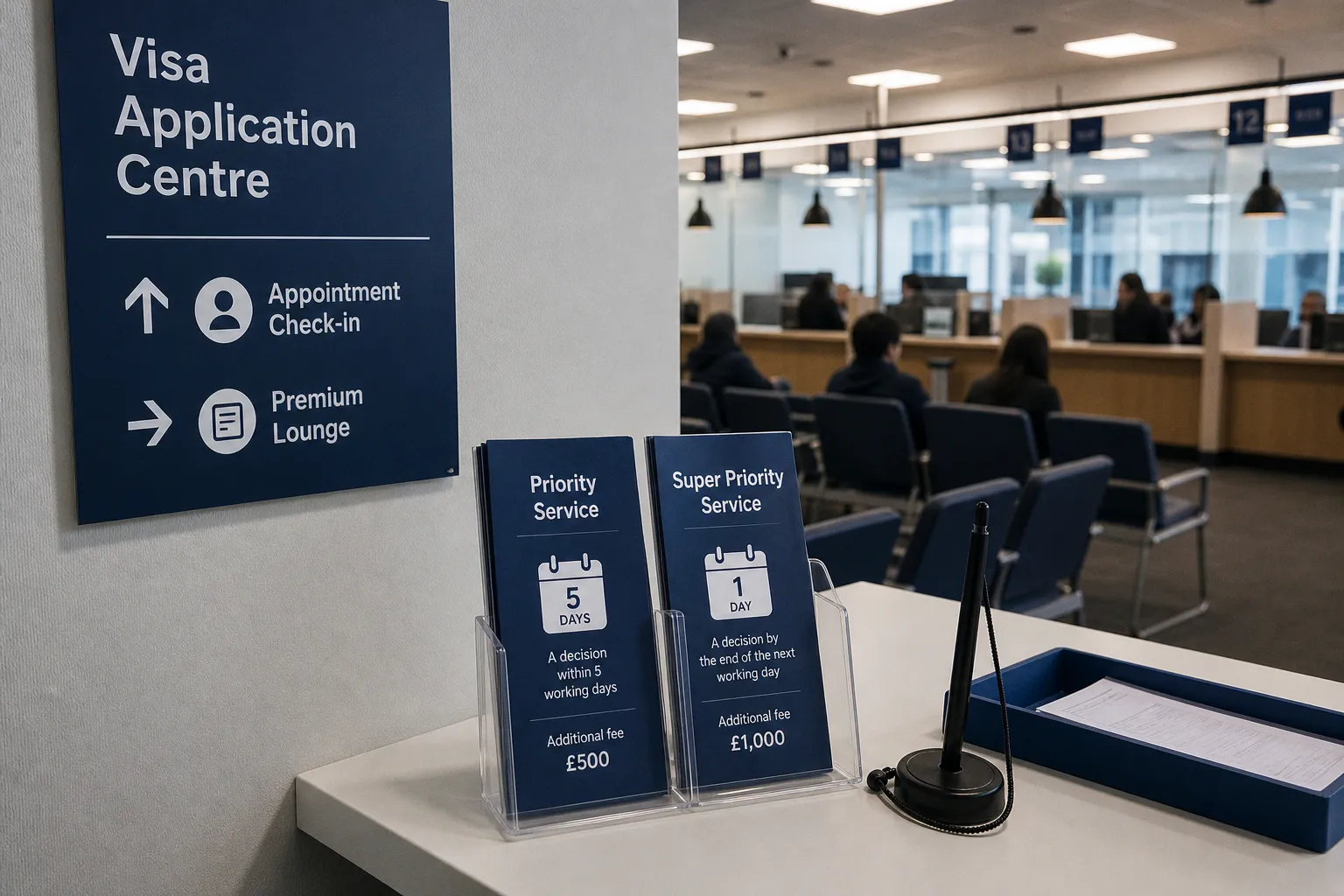
The Home Office just hiked its fast-track fees by double-digit percentages. If you are applying for a UK visa and your timeline is tight, this is not a theoretical exercise—it is a direct hit to your budget and your plans.
Choosing between the £500 Priority and £1,000 Super Priority service is a strategic decision. Get it wrong, and you lose money and time. Get it right, and you might just save your relocation, business trip, or university start date.
The Cost of Speed: Breaking Down the £500 and £1,000 Tiers
This is not a luxury add-on. It is a fee for a specific, guaranteed service tier. The core difference is time versus money—and the gap between those two tiers is wider than most applicants realise.
| Service Level | Fee (Outside UK) | Fee (Inside UK) | Advertised Decision Timeline |
|---|---|---|---|
| Standard | Included in application fee | Included in application fee | Varies (weeks to months) |
| Priority | £500 | £500 | Within 5 working days |
| Super Priority | £1,000 | £1,000 | By the end of the next working day |
The Priority tier is the workhorse option. Five working days is fast enough for most business travellers who have a confirmed meeting date, for students whose term starts in three weeks, or for families trying to coordinate a move. The extra £500 buys predictability in a system that can otherwise stretch to eight weeks or more on standard processing.
Super Priority is the emergency lever. You pull it when the five-day window is still too slow—when a flight is booked for Tuesday and the appointment is on Thursday, or when a critical employment start date cannot budge. The jump from £500 to £1,000 does not buy you twice the speed; it buys you a completely different processing lane. Think of the £500 as buying a place at the front of a very long queue. The £1,000 fee buys you a private elevator directly to the decision-maker's desk.
The £500 fee buys a place at the front of the queue. The £1,000 fee buys a private elevator to the decision-maker's desk. The guarantee is processing time, not a successful outcome.
One detail applicants consistently overlook: both fees are payable per applicant. A family of four applying for Priority service is looking at £2,000 on top of their base visa and IHS fees. For Super Priority, that jumps to £4,000. The cost scales linearly with the number of dependants, and there is no family discount.
Processing Timelines from Biometric Appointment to Final Decision
The clock does not start when you hit 'submit'. The countdown begins only after you complete your biometric enrolment—either at a visa application centre (VAC) using a VFS Global or TLScontact partner, or through the UK Immigration: ID Check app if eligible.
1. Day Zero: You attend your biometrics appointment or successfully use the ID Check app. Your case is now live for priority processing. This distinction matters enormously. If your nearest VAC has a two-week wait for a biometric slot, that delay sits entirely outside the priority processing guarantee. Your five-day clock has not started; you are still waiting in a separate queue just to begin.
2. Priority Path (5-day window): The Home Office commits to making a decision within five working days of Day Zero. This does not include the time for passport return or VAC courier services, which can add several days. In practice, applicants regularly report receiving decisions on day four or five, with the physical visa vignera arriving a further two to three days later. Build that buffer into your travel plans.
3. Super Priority Path (24-hour window): The decision is made by the end of the next working day after Day Zero. If your appointment is on a Friday, expect a decision by Monday. This is the fastest route available for most application types. The practical reality is that many applicants on this tier receive an email confirmation within hours, though the passport return still operates on its own timeline.
The critical risk factor here is the 'complex case' caveat. If your application triggers additional verification, requires an interview, or involves a criminal record that needs deeper scrutiny, the Home Office can void the timeline guarantee. The premium fee is generally non-refundable in this scenario, which brings us to the most expensive mistake applicants make.
Geographic and Category Restrictions on Expedited Service Availability
You cannot assume these services are available everywhere, for every visa. Availability is a function of your application location and the specific immigration route—and the gaps are more significant than the marketing suggests.
Location Matters:
Priority and Super Priority services are operated through commercial partners. If your local VAC—run by VFS Global or TLScontact—does not offer these tiers, you cannot pay for them. This is especially true in some regions where operational capacity is limited. Applicants in major capitals like Paris, New Delhi, or Abu Dhabi typically have access to both tiers. Applicants in smaller regional centres may find only Priority is available, or in some cases neither. Before you plan around a fast-track timeline, confirm the actual service levels at your specific VAC. GOV.UK and the partner websites list these, but the information can be buried several clicks deep.
Visa Category Restrictions:
Not all routes have access to the fastest tier. For instance, some family visa applications (like those under Form AF or Form SET(M)) may only offer standard and Priority processing, excluding Super Priority, based on current Home Office capacity. The same applies to certain settlement routes and some long-term work categories. The pattern is not always logical from the applicant's perspective—it tends to reflect back-office processing capacity rather than application complexity.
There is also a timing dimension. During peak application seasons—summer months ahead of the September university intake, or the period between January and March when employers onboard new hires—the demand for priority slots can outstrip supply. VACs in high-demand locations occasionally suspend Super Priority bookings for days or even weeks. This is not always communicated clearly in advance. Applicants who have already booked flights based on a Super Priority timeline find themselves scrambling.
The Complex Case Caveat: Why Paying More Does Not Guarantee a Deadline
This is the single biggest point of strategic failure. Applicants pay the premium, then get blindsided by a delay and demand a refund. The system does not work that way.
An application is deemed 'complex' at the discretion of the Home Office caseworker. The internal criteria are not publicly published, but common triggers include:
* Discrepancies in travel history or previous visa refusals (anywhere, not just the UK).
* Inconsistent financial documentation or sudden large deposits.
* The need for additional security checks or an interview.
* A criminal record or association with a person of interest.
* Name or biographical data matches against security watchlists.
* Sponsorship or employer details that require verification with a third party.
Once flagged, your case moves to a different workflow. The priority fee buys you faster initial assessment, but it cannot override the need for additional scrutiny. You mitigate this risk by building a bulletproof application package before you pay for speed.
Paying for priority service is not a bribe to overlook weaknesses. It is an accelerator for a strong case. A flawed application will be rejected quickly, whether you paid £500 or £1,000 for the privilege.
Here is the nuance that experienced immigration advisers understand: a 'complex' case under Super Priority processing may still be resolved faster than the same case under standard processing. The premium fee does not guarantee the 24-hour window, but it does place your application in a higher-priority queue even once additional checks begin. The guarantee is void, but the processing advantage is not entirely lost. This is worth knowing if your case has any red flags and you are weighing whether the premium is worth paying at all.
Calculating the Total Investment Beyond Expedited Processing Fees
The fast-track fee is just one line item in a substantial financial commitment. Failing to account for the full cost leads to sticker shock and interrupted plans.
Your total outlay includes:
* Standard Visa Application Fee: The base fee for your specific category. As of the current 2024 fee schedule, a Standard Visitor visa costs £115, while a Skilled Worker visa (for a certificate of sponsorship up to 3 years) runs £719. These figures are the starting point—longer visa durations and certain sub-categories command higher base fees.
* Immigration Health Surcharge (IHS): A mandatory upfront payment for access to the National Health Service, charged per year of visa length. For most adults, this is £1,035 per year. A 3-year visa means a £3,105 IHS payment on top of everything else. This single line item often dwarfs the actual visa fee.
* Priority or Super Priority Fee: The £500 or £1,000 addition per applicant.
* Ancillary Costs: VAC service fees, courier charges for passport return, and potentially premium lounge fees at the VAC. These vary by location but can add £50 to £100 or more per applicant.
Let the numbers speak. For a Skilled Worker applying for a 3-year visa with Super Priority service, the minimum financial picture looks like this: £719 (application) + £3,105 (IHS) + £1,000 (Super Priority) = £4,824. This is before you factor in flights, accommodation, or any professional legal fees.
Now compare that to a Standard Visitor visa applicant who only needs Priority processing: £115 (application) + £500 (Priority) = £615. The IHS does not apply to visitor visas, which makes the Visitor route dramatically cheaper overall—but the stakes are also lower. Nobody is relocating their life on a six-month visitor visa.
The takeaway is this: the fast-track fee is a multiplier, not a standalone cost. Its impact on your budget depends entirely on what sits beneath it. For a Skilled Worker family of four with Super Priority, you are looking at nearly £20,000 before anyone has bought a plane ticket. For a solo visitor with Priority, the premium is a manageable addition. Context is everything.
Before You Pay for Speed
1. Verify Availability: Confirm your specific visa route and local VAC offer the priority service you want. Do not assume—check the GOV.UK guidance for your visa category and the VFS Global or TLScontact page for your specific application centre. Slots can be suspended without broad notice.
2. Audit Your Case for 'Complex' Triggers: Review your history and documents with a sceptical eye. Previous refusals, complex travel patterns, or unexplained financial activity are red flags. If any of these apply, consider whether the premium fee is better allocated toward professional advice to strengthen the application itself.
3. Budget the Full Sum: Calculate application fee, IHS for the full visa length, the priority fee, and ancillary VAC costs. Have this total liquid and ready before you start the process. Mid-application funding gaps are a common source of stress and delays.
4. Submit a Flawless Application: Speed amplifies mistakes. A minor error that would cause a delay in standard processing will cause a rapid refusal under priority. Double-check every form and every supporting document. Cross-reference names, dates, and passport numbers across all materials.
5. Understand the Guarantee is Time, Not Outcome: You are paying for a faster decision, not a favourable one. A refusal will come quickly and will be final—along with the loss of your priority fee.
The decision to pay for fast-track processing is a tactical one. It assumes your application is strong and your timeline is inflexible. If there is any doubt about the former, the money is better spent on professional advice to strengthen your case. A rapid refusal is the most expensive outcome of all.