UK electronic travel authorisation: mandatory steps for visitors
- The most common shock at UK passport control right now isn't about visas, customs declarations, or even passport expiry.
- It's about a digital permission many eligible travellers didn't know they needed: the UK Electronic Travel Authorisation.
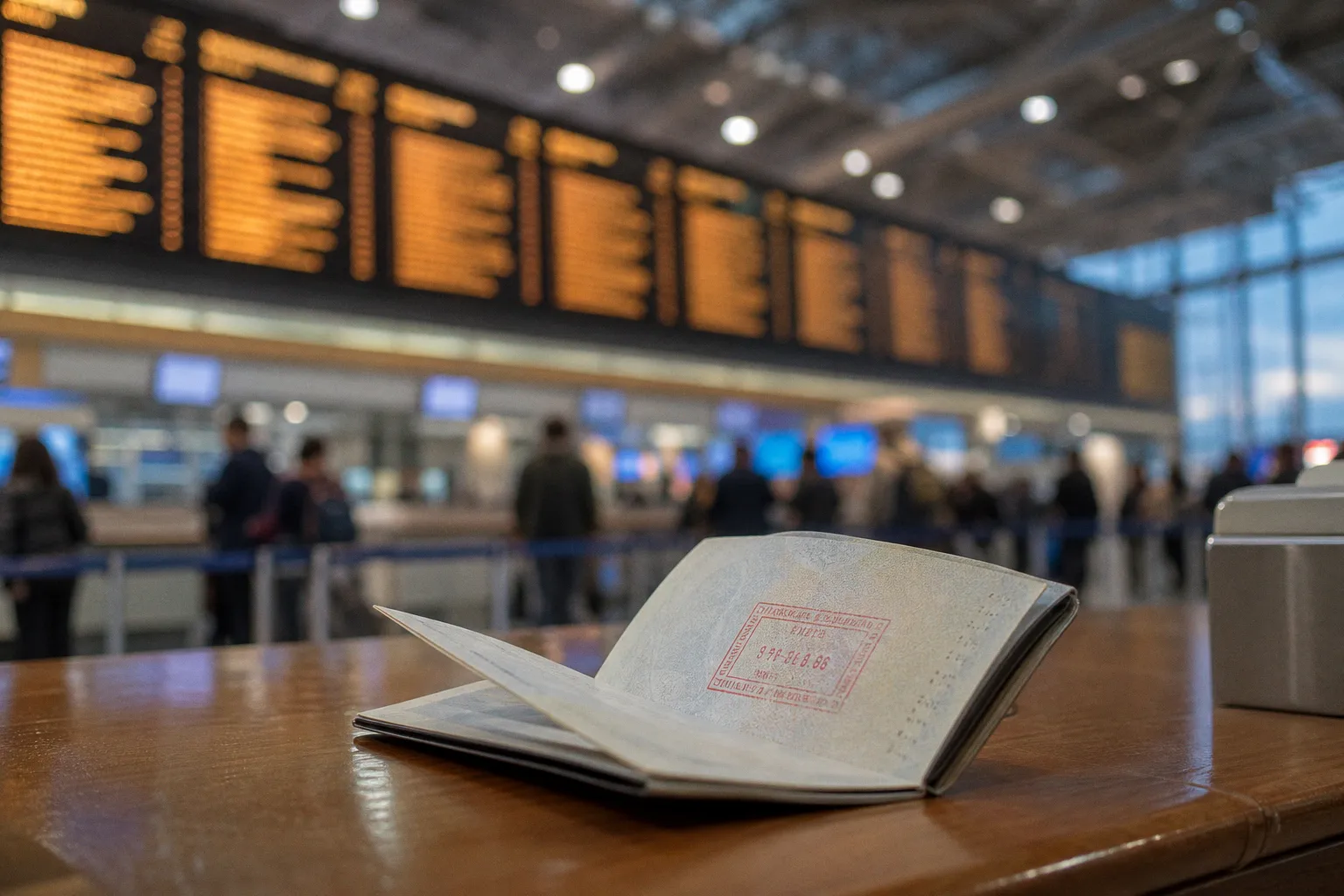
If you're a non-visa national flying into the UK, the airline is now required to verify that you have an ETA in place before you board. Show up without one, and the gate agent is the one who stops you — long before a Border Force officer ever sees your face, and well before you get anywhere near the eGates or a landing interview.
This is the friction the ETA scheme was built to address, and the friction it still creates for travellers who don't quite understand what they're signing up for. The good news is that for most eligible visitors the application is quick, the fee is modest, and the approval comes back fast. The bad news is that almost every "I got pulled aside at the border" story you hear right now traces back to one of a handful of avoidable mistakes: wrong passport on the form, an ETA submitted too late, a family that thought one application covered everyone, or a trip purpose that quietly crossed into territory the ETA doesn't permit. Let's walk through the steps in order, so none of those mistakes catch you.
What the UK ETA actually covers, and who actually needs one
The ETA sits in a specific lane. It authorises short visits for tourism, family visits, business trips, or short-term study — generally for up to six months per visit — across the United Kingdom as a whole plus the Crown Dependencies of Jersey, Guernsey, and the Isle of Man. One approval, fairly wide geography. If your trip fits that six-month window and the purpose is one of the permitted visitor activities, the ETA is the permission you apply for.
The eligibility test isn't quite as simple as "my country is on a list," because there are three distinct lanes at the border: people who need an ETA, people who need a full visa, and people who are exempt from both. Thinking through that lane before you book is what stops you from turning up at the gate with the wrong permission in hand.
| Lane | Who it covers | What you actually do |
|---|---|---|
| ETA required | Non-visa nationals from eligible countries visiting for up to 6 months | Apply online or via the app, pay £20, wait for the approval email, travel |
| Visa required | Nationals of countries outside the visa-waiver list, plus anyone coming to work, study long-term, or join family | Apply for the relevant visa through GOV.UK well in advance |
| Exempt | British or Irish passport holders; UK visa holders; people with permission to live, work, or study in the UK; airside transit passengers who don't pass border control | Travel on the existing permission — no ETA needed |
If you hold a British or Irish passport, you don't need an ETA. If you already hold a UK visa, or you have permission to live, work, or study in the UK, you don't need one either. If you're transiting airside — never passing through UK border control on your way to a connecting flight — the ETA doesn't apply. Those exemptions are narrow, and the easiest mistake at the boarding gate is assuming one of them covers you when it doesn't. That's where the red flags tend to appear, and that's why the airline's pre-flight check now matters more than it used to.
An ETA is a pre-travel screen, not a boarding pass. Skip it and the airline is required to refuse you at the gate — long before a Border Force officer ever sees your face.
The digital application: app or website, and what you'll need on hand
The application lives entirely online, which means the friction here is more about preparation than paperwork. You'll go through either the UK ETA app on your phone or the GOV.UK website, and either way the system needs three things from you: the exact passport you'll be travelling on, an email address you actually check, and a payment method — credit card, debit card, Apple Pay, or Google Pay all work. You'll also be asked to provide a facial photo, and this is where most people trip up because the technical specifications are precise.
The app route scans your passport using your phone camera and captures your face the same way. The website route is a bit more manual: you upload a passport-style photo and a separate facial photo of yourself. For that second image, the Home Office has laid out specific dimensions — at least 600 by 750 pixels, vertical orientation, between 50 kilobytes and 6 megabytes, saved as a JPG or JPEG. If your selfie doesn't meet those parameters, the application stalls and you start again. So take the photo in good light, against a plain background, and check the file before you upload. That five-minute save avoids a frustrating loop.
The £20 fee, and why it doesn't come back
The official ETA application costs £20, and once you hit submit, that £20 is non-refundable. The Home Office frames this as the cost of processing a digital permission that, in most cases, takes less than a day to approve — and given the speed of the system, it's reasonable enough. But the non-refundable detail matters because it's the reason you don't want to rush the application the night before you fly.
If you fat-finger a passport number, upload the wrong photo, or realise halfway through that you used your old passport instead of your new one, the £20 is gone. You'll have to submit a fresh application with another £20. So the practical move is to give yourself a quiet ten minutes, double-check the passport you're holding, and only then start the form. It's the cheapest insurance policy you'll buy for the trip.
The 3-day rule: apply early, even if approval usually comes faster
UK Visas and Immigration says ETA decisions usually arrive within one day, which sounds reassuring, and for most travellers that's accurate. But the guidance also tells you to allow up to three working days, and the difference between those two timeframes is the difference between a smooth trip and a missed flight. That's because you're not the only applicant in the queue, system glitches happen, and certain flags — a previous overstay, a name match, an unclear photo — can slow things down in ways that aren't visible to you.
The rule of thumb I'd give any traveller is straightforward: if you submit the application less than 72 hours before departure and something goes wrong, you have no buffer. Airlines are now required to verify that every passenger has either a valid ETA, a visa, or an exemption in place before they board. If the verification doesn't come back clean, you're not flying. So apply the moment you have a confirmed itinerary — weeks ahead if possible — and only board the plane once you've received the email confirming your ETA is approved.
Apply the moment your dates are firm. The one-day promise is the best case, not a guarantee.
Two years and tied to your passport: the rules most travellers miss
An approved ETA lasts for two years from the date it's granted, which sounds generous, but the validity is linked to the specific passport used in the application. Renew that passport, replace it because the old one's full, or have it lost or stolen, and the ETA goes with it. You'll need a fresh application, a fresh £20, and a fresh approval cycle. This is the detail that catches frequent travellers who don't think to update their records between trips.
The same logic applies to families. If you're flying with your partner and your two children, every traveller needs their own ETA, and that includes babies — yes, even infants who haven't had their first birthday yet. There's no group application, no covering adult, and no way to fold a child's authorisation into a parent's. A family of four flying to Manchester means four separate applications and four separate £20 fees. The mistake is forgivable, but it shows up fast when the airline runs the check at the gate.
Why an ETA doesn't guarantee anything at the border
Here's the part that catches even careful travellers off guard: the ETA is permission to travel to the UK, not permission to enter. On arrival, you'll still need to clear the eGates or speak to a Border Force officer, and they'll still make a decision based on what you say, what you've brought, and whether your stated purpose of visit fits the visitor rules. If something doesn't line up — a return ticket that doesn't exist, a story about working remotely that quietly crosses into ordinary employment — the ETA won't save you. The Immigration Rules make this explicit: a specified national who needs an ETA can be refused entry if they travel without one, and even an ETA holder must still obtain permission to enter on arrival.
It's also worth knowing what the ETA doesn't permit. It doesn't let you take up ordinary paid or unpaid work for a UK company. It doesn't make you self-employed in the UK, and it doesn't give you access to public funds. You can't use it to get married or form a civil partnership in the UK, and it doesn't allow indefinite or frequent residence. Six months per visit is the ceiling, and if your real intention is to live, work, or settle, the route you need is a visa, not an ETA.
A practical tip for the queue
If you want the airport queue to feel shorter, the trick is to handle the ETA before you pack. Have your current passport open to the photo page, run through the application on the app rather than the website if you can — it's faster and uses your camera to autofill most of the data — and screenshot the approval email once it arrives. At the gate, the airline will scan a code from your boarding pass or passport against the Home Office system. If your ETA isn't approved yet, that scan comes back red, and no amount of pleading changes the outcome. Treat the three-day buffer as non-negotiable, treat the £20 as non-refundable, and treat the ETA as the digital handshake that has to happen before the airline ever lets you board. That's the entire job — short, cheap, and a lot less painful than getting pulled aside at the eGates because you left it to chance.