UK Border Control: ETA vs. Visa Entry Procedures
The UK border control ETA is now a pre-boarding requirement, not a border-pass. Since 25 February 2026, eligible non-visa nationals — including EU, EEA and Swiss citizens — must hold an approved…
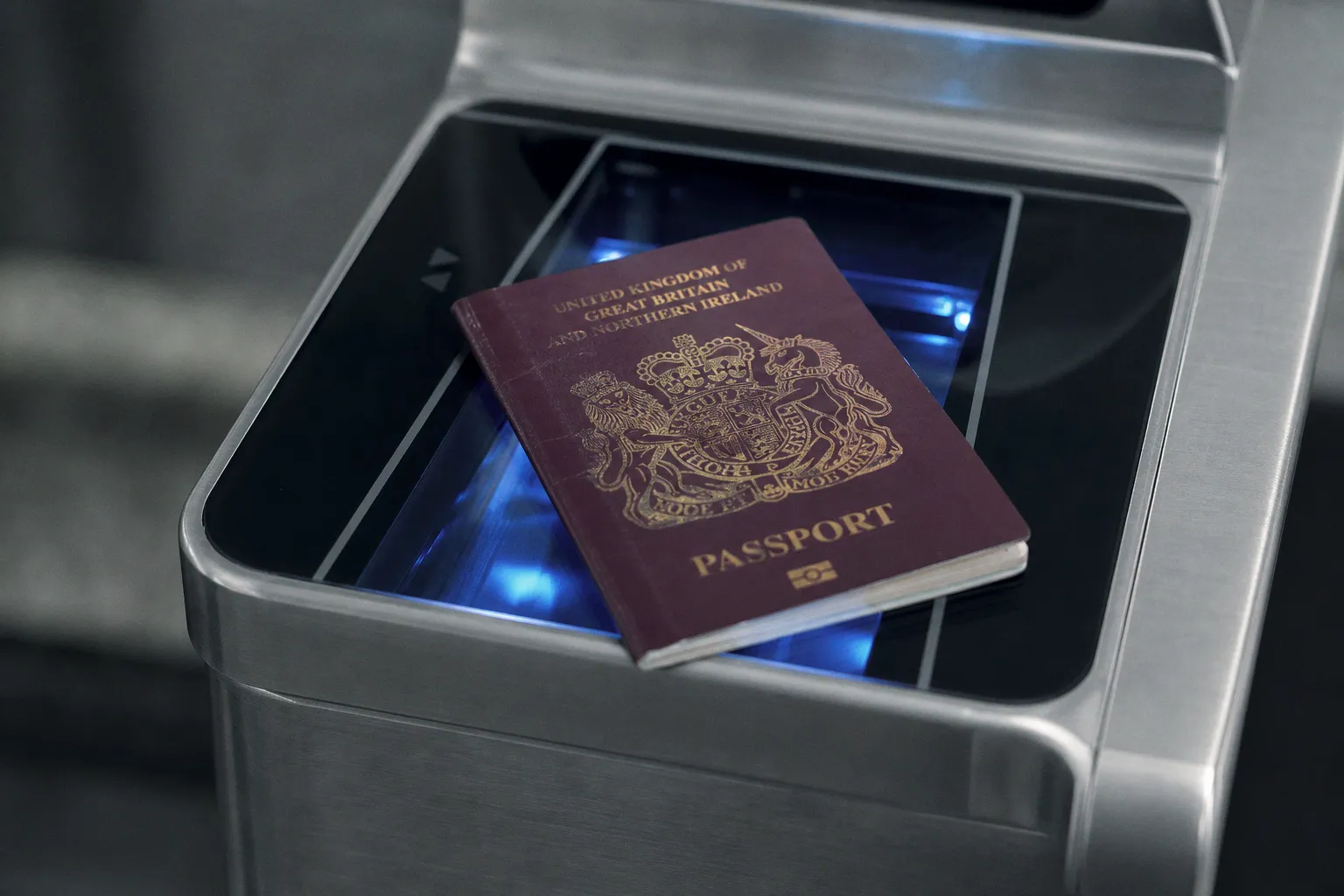
The UK border control ETA is now a pre-boarding requirement, not a border-pass. Since 25 February 2026, eligible non-visa nationals — including EU, EEA and Swiss citizens — must hold an approved Electronic Travel Authorisation before a carrier will take them to the UK. The fee is £20. The operational mistake is assuming that this approval settles the entry question.
It does not.
An ETA gets a traveller onto the manifest as someone permitted to travel. A visa is a more formal entry permission issued after a fuller application process. At passport control, both categories remain subject to Border Force scrutiny. Build your trip around that distinction, because the failure point is rarely the QR code or the airline desk. It is the moment an officer asks whether the purpose, duration and funding of the visit actually match what the traveller is doing.
An approved ETA clears the travel threshold. It does not remove the Border Force officer’s power to refuse entry.
Digital travel permission versus a visa: the difference that drives the border process
The ETA is designed for people who can visit the UK without applying for a Standard Visitor visa: short-stay tourists, family visitors, business visitors and eligible transit passengers passing through the border. It is linked digitally to the passport used in the application.
Its operating parameters are straightforward:
- It is valid for up to two years, or until the linked passport expires, whichever happens first.
- It supports multiple journeys.
- Each visit can last for up to six months, provided the traveller is genuinely visiting and follows the visitor rules.
- It cannot be used as a route into employment, long-term study or public funds.
- A new passport means a new ETA application. Do not arrive with an approval attached to a passport that is no longer valid.
A Standard Visitor visa covers many of the same visit purposes, but it is the route for nationals who need a visa in advance and for eligible travellers whose ETA application has been refused. The visa process involves more documentary evidence, a longer lead time and usually a physical visa vignette or digital immigration status linked to the traveller’s identity record.
The strategic point: neither category gives a traveller permission to reinvent the trip at the airport.
A visitor who says “tourism” in an ETA application but arrives with a plan to work, join a long course or live intermittently in the UK has a credibility problem. The same is true for a visa holder. Border Force does not need to prove a complex immigration scheme to act; inconsistency in the traveller’s account, documents or travel pattern can be enough to trigger deeper questioning.
| Border-control issue | ETA holder | Standard Visitor visa holder |
|---|---|---|
| Pre-travel permission | Digital ETA linked to passport | Visitor visa granted after a formal application |
| Typical application timing | Usually within 3 working days; often much faster | Can take up to 3 weeks |
| Cost as of 8 April 2026 | £20 | £135 for a standard visit visa of up to six months |
| Passport control route | May use an eligible eGate or see an officer | May use an eligible eGate or see an officer, depending on passport and gate eligibility |
| Is entry guaranteed? | No | No |
| If pre-travel application is refused | No appeal; apply for a Standard Visitor visa if eligible | Different immigration routes may be available, but the refusal must be addressed directly |
That last row matters. There is no appeal against an ETA refusal. Treat the ETA form as a controlled disclosure exercise, not a casual travel form completed in an airport lounge. If the system refuses the application, the next route is generally a Standard Visitor visa application — and that application must explain and mitigate the issue that blocked the ETA.
Passport control with a UK ETA: eGates reduce queues, not risk
At the airport, an ETA holder may be directed through an ePassport gate if they meet the gate’s technical and identity eligibility rules. The system reads the passport and runs the relevant checks. If the gate opens, the traveller has entered without an interview. If it does not, that is not automatically a refusal. It means the case goes to a Border Force officer for a manual decision.
Do not misread eGate access as a legal entitlement or a clean immigration history certificate. Gates are operational tools. They can refer passengers for routine reasons: an unreadable chip, an image mismatch, a random check, a technical issue, a travel-history flag or a requirement for an officer to assess the circumstances in person.
Since 8 July 2026, children aged eight and nine may use UK eGates when they are at least 120cm tall and travelling with an adult. Children under eight cannot use them. The height rule is practical: the biometric equipment must be able to capture and compare the child’s face properly.
For families, this changes queue management but not the underlying documentation standard. The accompanying adult should still be able to explain:
- where the family is staying and for how long;
- who is paying for the trip;
- the child’s relationship to the accompanying adult, particularly where surnames differ;
- the return or onward travel plan;
- any arrangements involving a UK-based host.
A child using an eGate does not eliminate the possibility of a Border Force conversation. It simply means the family may not be routed automatically to a staffed desk.
For adults, the eGate decision should be treated the same way. Have the evidence ready but do not stage a performance. A confirmed accommodation address, return itinerary, business meeting details, event registration or proof of available funds can be useful when the trip calls for it. The officer is assessing whether the visit is credible, not rewarding travellers for producing a thick folder.
At a UK eGate, speed is the benefit. Border-force discretion remains in the system.
The application phase: use the right route before the airline makes the decision for you
The ETA is typically processed within three working days and is often approved in minutes. That speed is useful, but it produces a predictable bad habit: travellers leave it until the day of departure.
Do not do that.
An ETA is mandatory before boarding for eligible travellers. If it is still pending, incorrectly linked to an old passport, or refused, the airline or ferry operator can stop the journey before UK Border Force ever sees the passenger. The cost of poor timing is not merely inconvenience. It can mean missed flights, lost reservations and a rushed visa application from a weakened position.
Use this sequence.
1. Set the correct immigration category first. Confirm that the journey is genuinely a visit, an eligible business activity, permitted study of the appropriate duration, or a qualifying transit. If the purpose needs a work or long-term study route, an ETA is not a workaround.
2. Apply using the exact passport that will be presented at boarding. Names, nationality, date of birth and passport number must align. An ETA linked to a replaced passport does not travel with the person automatically.
3. Answer character and immigration-history questions with precision. Do not omit a previous refusal or criminal matter because it was years ago, occurred outside the UK or seems irrelevant. A failure to disclose can create a much larger problem than the underlying event.
4. Allow processing time before booking becomes non-refundable. “Usually minutes” is not a service guarantee. Build in the stated three-working-day window.
5. Prepare the border narrative. Keep it short, true and supported by the itinerary. “I am here for ten days, staying at this hotel, attending these meetings, then flying home” is coherent. “I will see what happens” is not.
Visa applicants need an earlier start because the process is more document-heavy and can take up to three weeks. The standard visitor visa fee is £135 as of 8 April 2026, compared with £20 for an ETA. Do not choose the ETA merely because it is cheaper or faster. The eligibility threshold is the issue. If a traveller needs a visa, a quick ETA application will not solve the problem and may create a refusal record that must later be disclosed.
This is particularly relevant for frequent visitors. Repeated long stays, vague accommodation arrangements and a pattern that suggests the UK has become the person’s de facto home can attract scrutiny even where every individual visit appears to sit below six months. The visitor route is for visits. Build the travel pattern accordingly.
Officer interviews: what changes when the gate sends you to a desk
The practical difference between an ETA holder and a visitor visa holder narrows sharply once an officer starts asking questions.
Both should expect the officer to test four things: identity, purpose, finances and intention to leave. The visa holder may have supplied much of that evidence before travel. The ETA holder may have gone through a lighter digital permission process. But at the desk, Border Force is looking at the present journey, not just the historical application outcome.
A robust answer aligns across every layer:
- Purpose: holiday, family visit, permitted business meeting, conference or another visitor activity.
- Duration: a specific and plausible period.
- Accommodation: a hotel booking, host address or other clear arrangement.
- Funding: the traveller can pay for the trip without unauthorised work or reliance on public funds.
- Departure: a credible plan to leave at the end of the visit.
The weak cases are rarely complicated. They are contradictory. A traveller says they are visiting a friend but cannot provide an address. They state that they are attending a conference but cannot name it. They claim a two-week holiday while carrying evidence of an open-ended move. They answer questions defensively instead of directly.
Keep devices, papers and bookings accessible. Answer the question asked. Do not volunteer a sprawling life story. But do not try to outmanoeuvre an officer with partial answers either. At the border, evasiveness is evidence of risk.
For visitors interested in historic towns, it also helps to distinguish a normal tourism itinerary from a vague claim of “research” or relocation scouting. A coherent trip built around museums, walking routes and stays in preserved town centres is easy to explain; broader shifts in that travel market are covered in this analysis of new standards shaping heritage travel in historic towns. The border issue is still simple: the itinerary must match visitor activity, available funds and an intended departure.
Transit: determine whether you cross the UK border at all
Transit produces avoidable ETA mistakes because travellers use the word loosely. The operational question is not whether the UK is between the origin and final destination. It is whether the passenger passes through UK border control.
If a traveller remains airside — staying within the airport’s international transit area and not seeking admission to the UK — an ETA is not required at Heathrow and Manchester. This is an airside transit arrangement, not a general permission to enter Britain.
If the itinerary requires the passenger to pass through border control, the ETA requirement applies to eligible non-visa nationals. That includes situations where a person wants to collect baggage, change terminals through landside areas, stay overnight outside the transit zone, or otherwise be admitted to the UK.
Do not rely on assumptions made from a booking screen. Check the terminal connection, baggage arrangement and carrier instructions before travel. A ticket may say “self-transfer”; that often means the passenger must enter the UK, retrieve luggage and check in again. That is not airside transit.
The same discipline applies to immigration documents. A valid ETA does not cure a transit plan that requires a visa for another jurisdiction, and a destination-country visa does not cure a missing ETA where UK border control must be crossed. Map each border separately.
Customs is the second control point, not an afterthought
Clearing passport control is not the end of the arrival process. Baggage and customs declarations are governed separately. ETA status and visa status do not change the duty-free rules.
For personal goods such as gifts and souvenirs brought into Great Britain by commercial transport, the allowance is £390. For arrivals by private plane or private boat, it is £270. Go over the applicable limit and tax and duty are calculated on the total value of the goods in that category — not simply the amount above the threshold.
That catches travellers who assume a £450 purchase only creates a charge on £60. It does not work that way.
Also, personal allowances cannot be pooled. A couple cannot combine two allowances to cover one person’s high-value purchase. Keep receipts for higher-value items, know the total value before you arrive, and declare goods where required. The green channel is not a declaration strategy.
This matters for short-term visitors who have focused entirely on their UK ETA e-gates plan. A fast biometric arrival does not exempt anyone from customs controls, baggage screening or a Border Force intervention after the gate.
Treat the ETA as the start of compliance, not the finish line
The UK ETA has made travel authorisation faster and more digital. It has not lowered the standard at the border. The traveller still needs a coherent purpose, a valid passport, credible arrangements and a plan that fits the visitor rules.
Choose the ETA route only where it fits. Apply early. Link it to the correct passport. Know whether your transit is airside or landside. Then arrive prepared to explain the trip in plain language.
The sharpest risk is not being questioned. It is being caught in an inconsistency that could have been fixed before departure. An ETA refusal has no appeal route, and non-disclosure of a criminal conviction or prior immigration refusal can have consequences far beyond one cancelled journey. Build the case cleanly before the airline checks the passport.