UK visa fees in Pakistan: current rates and payment guide
- The numbers never quite line up.
- You pull up the GOV.UK fee table, find your visa category, convert the pounds to rupees at the rate your bank app shows, and the total still feels off — heavier than you expected, and harder to budget around.
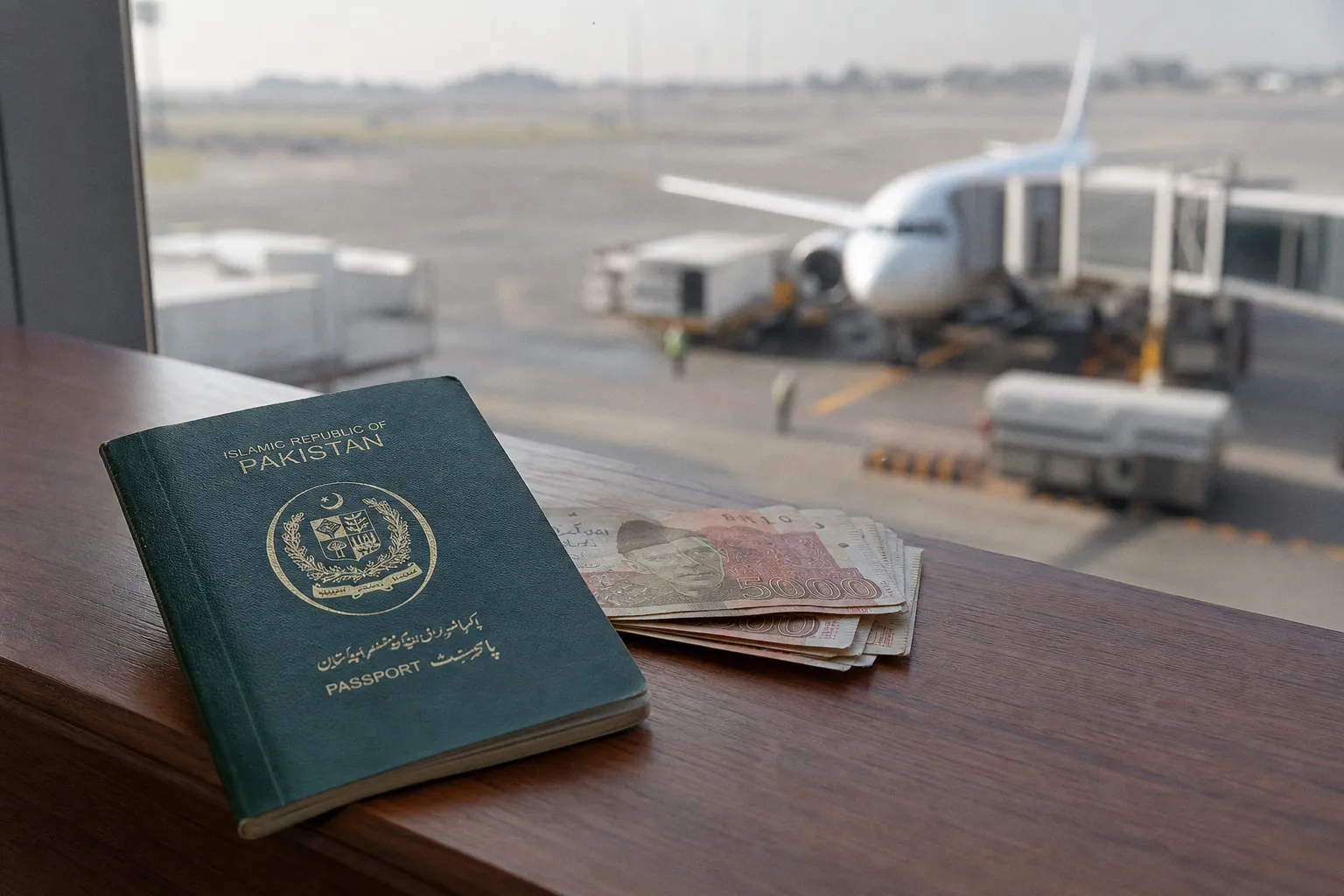
If you're applying for a UK visa from Pakistan right now, that small moment of confusion isn't a mistake on your end. It's the gap between a published fee and a final payment, and the gap is where most of the friction lives.
Here is the picture as of April 2026. UK Visas and Immigration (UKVI) raised out-of-country application fees by 6–7% on April 8, and almost every mainstream category moved with it. A six-month Standard Visitor visa now sits at £135, a Student visa applied for from outside the UK at £558, and a Spouse or family entry clearance at £2,064. Those are the headline figures, but they are the start of the calculation, not the end. The Immigration Health Surcharge applies to most work, study, and family routes, and every pound you pay gets converted into Pakistani Rupees through the Home Office Exchange Rate Policy, which adds a 4% markup over the live bid rate. What follows is a clear walk-through of what a UK visa actually costs from Pakistan this year, where each charge comes from, and how to pay it without surprises at the VFS Global counter.
The visa fee is one line on a longer receipt. The IHS, the exchange rate markup, and any optional priority service all sit between you and a final number in PKR — and they all matter.
Why the April 2026 fee changes caught so many applicants off guard
Fee increases from the Home Office are not new, but this round landed with a wider spread than usual. The 6–7% bump applies across the standard visitor, study, work, and family visa categories, which means the same percentage climb hits very different starting points — and produces very different rupee totals at the end.
If you were budgeting for a six-month Standard Visitor visa at the old £127 rate, you have now moved to £135. If you were planning a Skilled Worker application from Pakistan, the up-to-3-years fee went from £769 to £819, and the over-3-years fee from £1,519 to £1,618. A Spouse visa entry clearance, already one of the largest single line items in any family application, climbed from £1,938 to £2,064. None of these are rounding errors — they are meaningful shifts for households paying in PKR, where every additional pound feels bigger once it passes through the exchange rate policy.
The reason this adjustment slipped past so many applicants is timing. Home Office fee updates don't always come with a long public runway, and the April 8, 2026 effective date was confirmed shortly before it took effect. The new rates apply to any application submitted on or after that date, regardless of when you started gathering documents. If you started your application in March but submitted in April, the new fee is the one you pay — which is the kind of detail that quietly costs a family several thousand rupees if no one notices.
What each main visa category now costs from Pakistan
The simplest way to think about your application cost is in three layers: the visa application fee, the Immigration Health Surcharge where it applies, and any optional priority service. The first layer is fixed by category, and the current rates for the most common routes from Pakistan look like this:
| Visa category | UKVI application fee (April 2026) |
|---|---|
| Standard Visitor visa (up to 6 months) | £135 |
| 2-year long-term Standard Visitor visa | £506 |
| 5-year long-term Standard Visitor visa | £903 |
| 10-year long-term Standard Visitor visa | £1,128 |
| Student visa (out-of-country) | £558 |
| Skilled Worker visa (up to 3 years, out-of-country) | £819 |
| Skilled Worker visa (over 3 years, out-of-country) | £1,618 |
| Spouse / family entry clearance | £2,064 |
A few practical points sit around that table. Long-term Standard Visitor visas — the 2-, 5-, and 10-year options — allow stays of up to 6 months per visit, but they charge a much higher entry clearance fee upfront. If you are weighing one, ask yourself honestly whether you will make enough trips to justify the £506, £903, or £1,128 outlay. Many people who pick the 10-year option use it twice and would have been better off paying the £135 short-term fee each time.
The Student visa figure is for the main applicant; dependants pay the same IHS tier but their own application fee structure varies by age and route. The Skilled Worker split between up-to-3-years and over-3-years matters because the IHS is charged per year of visa length, so picking the right sponsorship period changes your total meaningfully. If you are applying as a family, the application fee is per person — including each child who needs their own entry clearance — and so is the IHS.
The Immigration Health Surcharge, and who actually has to pay it
This is the line that catches people off guard most often, because the IHS is charged separately from the visa application fee, paid online as part of the same application journey, and it does not apply to every category.
The current rates have held since February 6, 2024. They are £1,035 per year for adult work and family visa applicants, and £776 per year for students, dependants under 18, and Youth Mobility Scheme applicants. If you are applying for a Skilled Worker visa for three years, that is £1,035 × 3 = £3,105 on top of your £819 application fee. For a Student visa, the IHS is calculated on the actual visa duration the Home Office issues — which reflects your course length plus any additional post-course leave the route allows — so the total depends on what is granted, not on a fixed number of years assumed in advance. Multiplied at £776 per year, the surcharge frequently ends up larger than the £558 application fee itself, but the exact figure varies case by case.
Here is where the relief lives. Standard Visitor visas for stays of up to 6 months are exempt from the IHS. Health and Care Worker visa applicants and their dependants are also exempt. So if your trip is short, the calculation collapses neatly to the visa fee plus any priority service — no surcharge layer to budget for, no per-year multiplication to worry about.
If your route does require the IHS, you will pay it online through the same system where you submit your application and biometrics, before attending your VFS Global appointment. The system calculates the exact total in pounds first, then converts to PKR at the live rate plus the markup — which leads directly to the next layer of the puzzle.
Standard Visitor visa applicants do not pay the IHS. If your only entry clearance is a short-term visitor visa, your rupee total is the visa fee plus any optional priority service, full stop.
How pounds become rupees: the Home Office Exchange Rate Policy explained
This is where most of the confusion at the VFS counter actually comes from. The Home Office does not charge in pounds to applicants paying from Pakistan — it charges in Pakistani Rupees, and the rate it uses is set by the Home Office Exchange Rate Policy (HOERP).
The mechanics are straightforward once you see them. HOERP takes the live GBP-PKR bid rate from OANDA and applies a 4% markup on top. The rate updates weekly, which means the rupee figure you see on the payment screen can move between the day you start your application and the day you finish paying. Your bank or card provider may also add its own foreign exchange fee or international transaction surcharge on top of the Home Office figure, and those local charges sit outside what UKVI collects — the Home Office does not control them, but you still pay them.
If you are budgeting, the practical move is this. Take the current OANDA bid rate, add 4% on top to mirror what UKVI will charge, then check your card issuer's international transaction fee — typically 1–3% for Pakistani-issued Visa or MasterCard. The combined effect is that the final rupee amount you pay is meaningfully higher than a naive pound-to-rupee conversion. For a £2,064 Spouse visa application, the difference between a casual conversion and the real out-of-pocket figure can run into several thousand rupees. The same calculation, applied to a Skilled Worker over-3-years route with three dependants paying IHS at the adult rate, lands in a very different place than the headline fee suggests, which is why the rupee math is worth doing once on paper rather than discovering it at the appointment.
VFS Global in Pakistan accepts online payments via Visa and MasterCard credit and debit cards for both the UKVI fees and any priority services. The centres operate in Islamabad, Karachi, Lahore, and Mirpur. There is no cash option for the official Home Office fee at the counter, which is why arriving without a working international card is the single most common avoidable reason an appointment gets delayed or restarted.
Priority and Super Priority: when the optional fees are worth it
If the standard processing window feels too long, UKVI offers two optional paid services that speed up the decision. Both must be booked and paid for online before you attend your VFS appointment, and both are non-refundable if your application is refused — the same rule as the main visa fee itself.
- Priority Visa service — £500. A decision is typically made within 5 working days from the day your application is placed into consideration, which usually means from your biometrics appointment.
- Super Priority Visa service — £1,000. A decision is typically made within 24 hours of your application being placed into consideration, again usually from the biometrics slot.
These fees are per applicant, charged in PKR through the same HOERP conversion, and stack on top of the visa application fee and the IHS. For a family of four applying together, choosing Super Priority adds £4,000 before the exchange rate markup — which is the kind of line item that changes the cost-benefit calculation sharply if travel is not genuinely urgent.
The realistic decision is about timing, not anxiety. If your travel date is fixed and the standard window will not get you there, Priority is the calmer choice for most people. If you need certainty inside a 24-hour window — a funeral, an urgent business meeting, a hard flight booking that cannot be moved — Super Priority exists for exactly that reason, and the £1,000 buys you a defined decision rather than an open-ended wait. If you have flexibility of a month or more, skip both and let the standard route work; the £500 or £1,000 is real money in rupees, and the decision quality is the same as it would be through Priority.
A practical tip for the VFS counter
The single most useful habit you can build around this whole process is to do the maths in pounds first, then convert — not the other way around. Decide what you are willing to spend before you look at the PKR figure. Confirm your card's international transaction fee with your bank before the appointment day, so the final charge is not a surprise at the till. And if you are applying as a family, lay the total out across every applicant and every year of IHS before you start the application — that one step prevents more panicked phone calls to VFS than any other.
If your visa route requires the IHS and you are paying for dependants, build a simple spreadsheet that lists each family member, their application fee, and their IHS per year multiplied across the visa length. It takes ten minutes, and it removes the only real source of avoidable stress in the whole payment flow.
The fees are real, the markup is real, and the in-between layers deserve a clear head. The good news is that once you have done the maths properly, the rest of the process is just paperwork — and that is a much easier problem to solve.