UK visitor visa from India: 5 key requirements
The Indian passport is, in many ways, the world's most-watched travel document. Every year, hundreds of thousands of applications pour into VFS centres from Mumbai, Delhi, Chennai, Hyderabad…
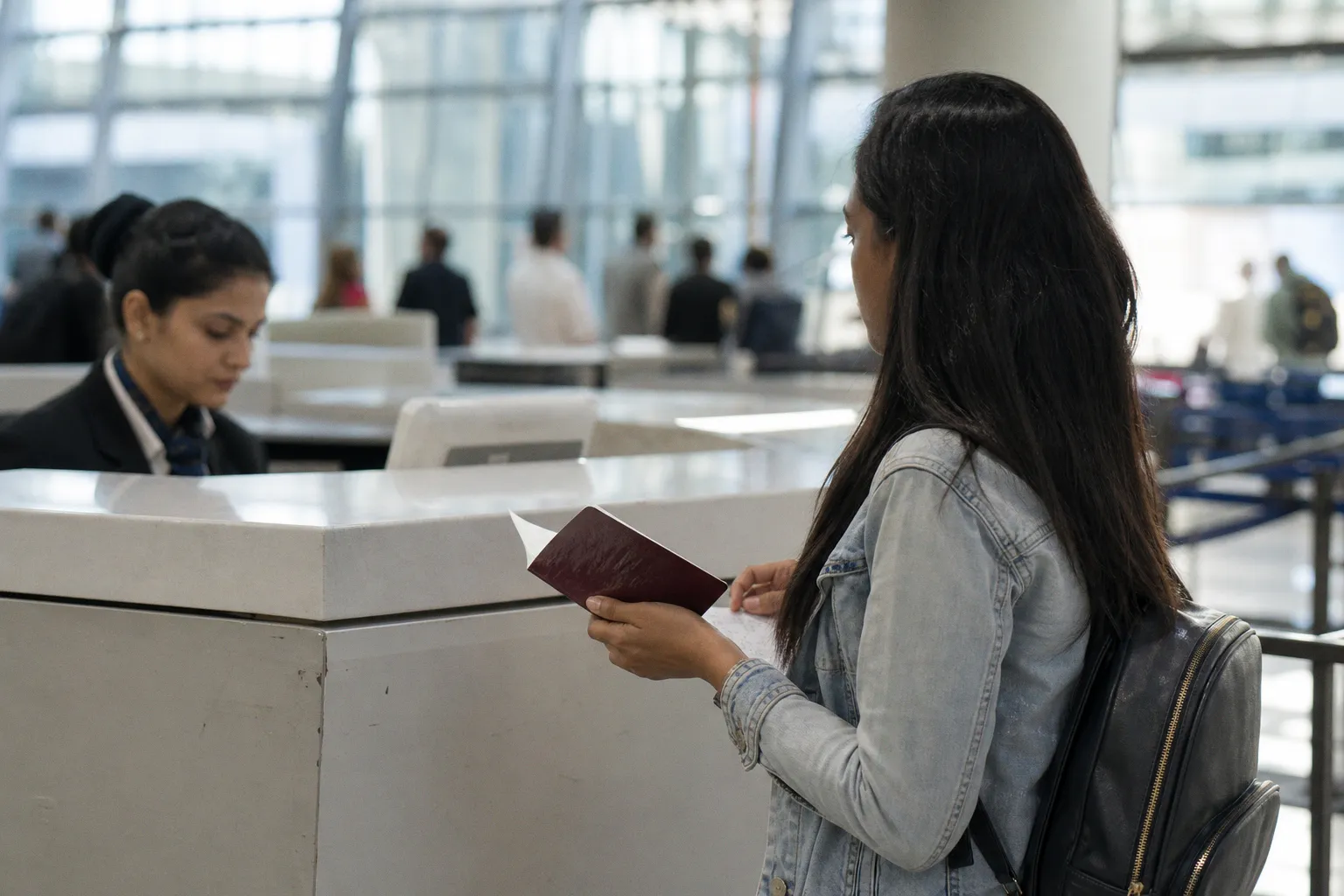
UK Visitor Visa India: 2026 Application Requirements
The Indian passport is, in many ways, the world's most-watched travel document. Every year, hundreds of thousands of applications pour into VFS centres from Mumbai, Delhi, Chennai, Hyderabad, Bengaluru, Kolkata, and Jalandhar, each one carrying the same quiet pressure: a holiday with aging parents in London, a wedding to attend in Birmingham, a graduate's first trip abroad. The questions that come up at the kitchen table are rarely about sightseeing. They're about whether the bank statements are "enough," whether the employer's leave letter sounds strong enough, and whether the new fee changes have quietly made the trip unaffordable. This guide walks you through what the Home Office actually wants from Indian applicants in 2026, in the order the caseworker will read your file.
The UK visitor visa from India is not a formality. It's a credibility document. Every line you submit is a small answer to one question: "Why will this person go home?"
The 2026 Application Process: From GOV.UK to a VFS Biometrics Chair
If you've never applied before, the architecture of a UK visa application can feel like a maze of portals. In reality, the process breaks into four clean steps, and once you see them in sequence, the anxiety drains out of it.
Step 1 — Fill in the online application on GOV.UK. The application is the legal core of your file. You'll enter personal details, travel history, accommodation address in the UK, the person you're visiting (or "tourism" if you're travelling independently), and a series of yes/no questions about prior refusals, criminal records, and previous UK visits. Take your time here: any inconsistency between the form and your supporting documents becomes a "red flag" at the decision-making stage.
Step 2 — Pay the visa fee. As of the April 8, 2026 fee update, the Standard Visitor visa (up to 6 months) costs £135, which is officially priced at 17,980 INR on the Home Office portal. Payment happens at the end of the online form. You'll then receive a confirmation email with a link to schedule your biometrics.
Step 3 — Book a VFS Global appointment. Indian citizens cannot skip this stage. VFS Global runs the UK's visa application centres across India, and they're the only place to enrol fingerprints and a photograph. Slots in metros fill up quickly during the May–August and October–December travel windows, so book at least three to four weeks before your intended travel date.
Step 4 — Submit documents and biometrics on appointment day. You walk in with a printed document pack, your passport, and the VFS receipt. Staff scan and forward everything to the Home Office. Your passport is usually returned by courier within seven to ten working days.
A small but useful clarification: the UK operates a paper-light system, so VFS is essentially a courier plus biometrics service, not a decision-making body. Decisions are made by Entry Clearance Officers in the UK, working off the digital file VFS uploads.
If your travel is locked in for a specific date, work backwards from it. Count three weeks for standard processing, then add time for VFS slot availability, then add a week of buffer. That's your real lead time.
Financial Documentation: What the Home Office Wants to See
The financial requirement is the part Indian applicants most often overthink, and where most refusals quietly happen. The Home Office does not publish an official minimum bank balance, which is a frustration shared by almost every applicant and immigration adviser in the country. What the caseworker is doing, instead, is reading a story: is this person's financial life consistent with the trip they're claiming to make?
Here's the practical paper trail the UKVI expects to see.
Bank statements for the last 6 months, stamped and signed by the bank. Not just printed from net banking. Many VFS centres in India will reject an unstamped statement outright, so ask your branch for a stamped set during a quiet hour. The statement should reflect a steady, believable income flow — sudden lump-sum deposits in the week before the application are one of the classic red flags.
Salary slips for the last 3 to 6 months, on company letterhead, ideally with a payslip-to-bank-transfer match. If you're paid in cash or via a current account that's not in your name, expect friction.
Income Tax Returns (ITR) or Form 16 for the last 2 to 3 years. This is where the long-term earnings picture comes in. A first-time traveller with a thin ITR file will find it harder to convince a caseworker than someone with a clean three-year history. If you're a freelancer or consultant, your ITR — combined with GST or business registration — does the same work.
A common mistake is to assume a high balance is the whole answer. It isn't. A ₹25 lakh balance sitting dormant for six months with no income trail behind it can actually weaken an application, because it raises the obvious question of provenance. The right framing is "stable, documented, recurring income consistent with the trip's cost."
Establishing Strong Ties to India: The Question Behind the Question
Every visitor visa is, underneath the paperwork, an argument that you'll leave the UK when your permitted stay ends. The question the entire application is built around is whether your life in India has anchors strong enough to pull you back at the end of the trip — a job, a family, a business, a study place, a lease, a pending return. For Indian applicants, that question is assessed primarily through your ties to India. If your financial life is one half of the story, your ties are the other.
For salaried applicants, the cornerstone document is a leave approval letter from your employer — also often called a No Objection Certificate (NOC). A strong version of this letter specifies your role, your salary, the dates of approved leave, and an explicit statement that you will return to resume your position. A weak version just says "Mr Sharma is travelling to the UK." The latter is not enough.
For self-employed applicants and business owners, the equivalent is a different paper set: GST registration, Udyam/MSME certificate, partnership deed, or company incorporation documents. The point isn't the certificate itself but the evidence of a working economic life that needs you back in India.
For students, a bonafide certificate from the institution plus an enrollment letter for the next semester carries the same logic.
Other anchors that quietly help: dependent family members in India (children, parents, spouse), property ownership, fixed deposits with a long maturity date, and prior travel history with on-time returns. None of these are officially required, but they tend to land as supporting signal in a caseworker's reading of the file — small but consistent hints that this applicant is rooted somewhere they'll return to.
If you can't immediately name three things tying you to India, the application has a structural problem — and no amount of bank balance fixes that.
Visa Fees and Long-Term Options: The Real Cost of Travel
Most first-time applicants apply for the standard 6-month visa, but the Home Office also offers long-term Standard Visitor visas for frequent travellers. The pricing structure, as of April 2026, is worth understanding side by side.
| Validity | Stay per visit | Fee (GBP) | Fee (INR) |
|---|---|---|---|
| 6 months | Up to 6 months | £135 | 17,980 |
| 2 years | Up to 6 months per visit | £506 | 67,392 |
| 5 years | Up to 6 months per visit | £903 | 120,267 |
| 10 years | Up to 6 months per visit | £1,128 | 150,234 |
A few practical points to read into that table. First, even the 10-year visa caps every individual visit at 6 months — it does not give you residency-style rights. Second, the per-visit economics only make sense for genuine frequent travellers; if you go to the UK once every two years, the £135 short-term visa is the rational choice. Third, the long-term visas are issued at the Home Office's discretion; a thin application is just as refusable at the 10-year tier as at the 6-month tier.
VFS adds a small service charge on top of the Home Office fee, which varies slightly by centre. The official figure is always what's quoted on the GOV.UK portal at the moment of payment, so don't trust outdated fee tables circulating on travel forums.
Processing Times and Expedited Services
Standard processing for a UK visitor visa from India takes approximately 15 working days — about three weeks — counted from the date of your biometric appointment, not the date you submitted the online form. During peak travel seasons (summer holidays, Diwali, Christmas, and the May university graduation window), the same application can stretch to six to eight weeks, because the queue at the decision-making end simply gets longer.
If your dates are tight, two paid expedite options exist.
- Priority Service — £500 (66,593 INR): a decision within 5 working days from biometrics.
- Super Priority Service — £1,000 (133,187 INR): a decision by the end of the next working day.
Both are non-refundable if the visa is refused, and both require an available slot at the relevant VFS centre. Super Priority in particular is capacity-limited; during peak season, it often disappears from the booking calendar weeks in advance. The honest practical advice: book your VFS slot first, then upgrade to Priority or Super Priority only if a slot is genuinely available. Paying the expedite fee doesn't create capacity — it just buys you a place at the front of the same queue.
What Trips People Up: Common Misconceptions
A few patterns come up so often in refusals that they're worth naming directly.
"Indian citizens need an ETA for the UK in 2026." They don't. The UK Electronic Travel Authorisation (ETA) is rolling out to a growing list of nationalities — including, eventually, some Gulf and European countries — but Indian passport holders are not on the eligible list in 2026. If you try to enter the UK on an ETA, you'll be stopped at the airline boarding gate. You need a full Standard Visitor visa, issued as a vignette in your passport.
"Booking non-refundable flights and hotels is required." It is not. In fact, the Home Office actively warns against making large non-refundable commitments before a visa is issued, because the refusal risk falls entirely on the applicant. A clear, refundable itinerary — even a tentative one with dates and an address — is enough.
"A large bank balance guarantees approval." It doesn't. A refusal with a healthy balance typically cites insufficient ties to India or inconsistent income history, not lack of funds.
"The visa fee is refundable if I'm refused." It isn't. The application fee covers processing, not a guaranteed outcome.
"ETA-style digital processing is the future." It's a fair instinct, and the same shift is reshaping identity and digital infrastructure across India's public and private sectors — a topic covered in this piece on India's digital sector facing competition, policy and tech challenges. But the UK border is still a vignette-and-stamp system for Indian nationals, and that hasn't changed for 2026.
A Practical Tip for the Day You Actually Fly
A useful habit, once the visa is in your passport: at Heathrow (or wherever you land), have the email from your UK host, your return ticket, and your accommodation address ready in a single screenshot on your phone. The landing interview is short, often just two or three questions, and the officer is looking for the same story your application told — calmly, briefly, and consistently. Speak to the officer the way you wrote the application: the same job, the same dates, the same reason for returning. Hesitation, where the application was confident, is the one thing that creates friction in a queue that otherwise moves smoothly.
Everything else — the bank statements, the NOC, the ITR — has already done its work before you ever reach the eGates. The interview is the last page of the file, not the first.